
Our Namesake
Benjamin Franklin Inventions, Virtues, Quotes and a Legacy That Lives On
Printer, scientist, inventor, writer, diplomat and founder of libraries, fire companies and schools. Benjamin Franklin spent his life looking for practical answers to real problems. Here is the story of the man our Society is named for, and how his ideas still shape what we do in Franklin County, North Carolina.
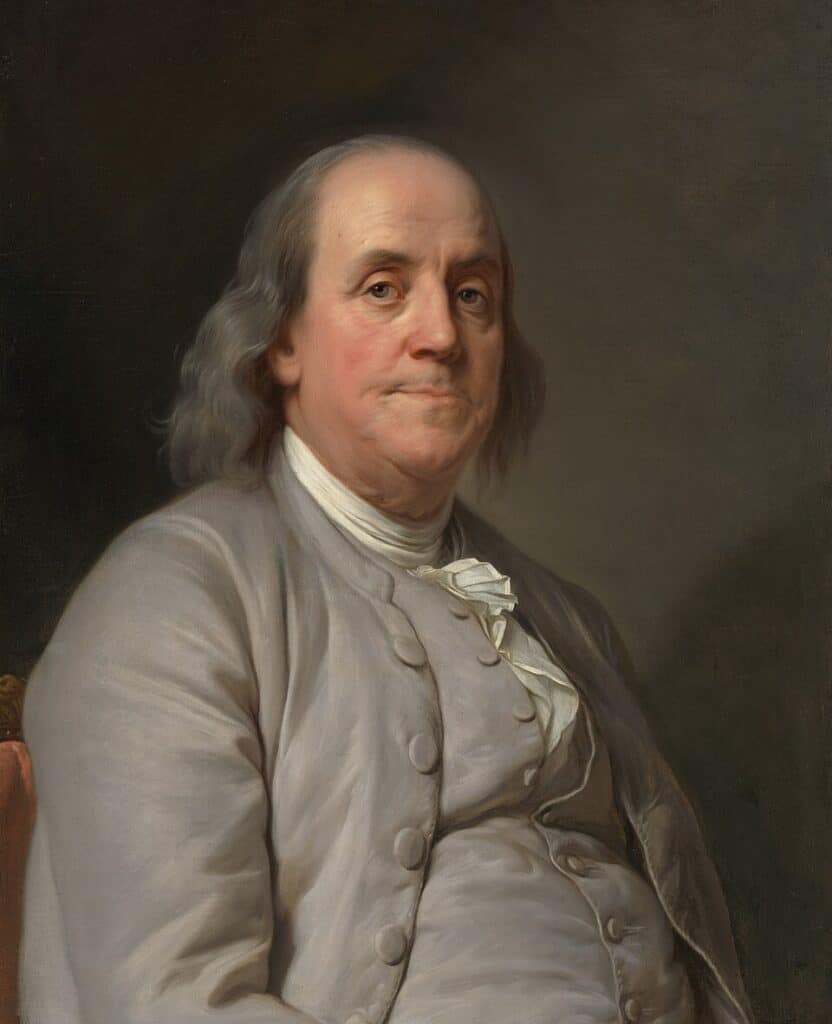
- Born
- January 17, 1706, Boston
- Died
- April 17, 1790, Philadelphia
- Schooling
- About two years
- Our county
- Franklin County, NC, named for him in 1779
His Life
Who Was Benjamin Franklin?
Benjamin Franklin was born in Boston in 1706, the fifteenth of seventeen children of Josiah Franklin, a candle and soap maker. His family could afford only about two years of school. At twelve he was apprenticed to his older brother James, a printer, and he taught himself the rest by reading every book he could borrow.
At seventeen he ran away to Philadelphia with almost no money. Within a few years he owned his own print shop and a newspaper, the Pennsylvania Gazette. By his early forties he had done well enough to step back from the business and give his time to science and public service.
The rest of his life reads like several lives at once. He proved that lightning is electricity. He helped write and signed the Declaration of Independence. He spent nine years in France winning the support the young country needed to survive the Revolution. At 81 he sat in the Constitutional Convention and signed the U.S. Constitution. Through all of it he kept asking the same question: what would actually make life better for ordinary people?
A Short Timeline
- 1706Born in Boston
- 1718Apprenticed to his brother James, a printer
- 1723Arrives in Philadelphia at 17
- 1727Forms the Junto, a club for self-improvement and public good
- 1731Founds the Library Company of Philadelphia
- 1732Publishes the first Poor Richard's Almanack
- 1742Designs the Pennsylvania fireplace, later called the Franklin stove
- 1749Proposes the Academy that became the University of Pennsylvania
- 1752Flies his kite in a thunderstorm
- 1776Signs the Declaration of Independence and sails for France
- 1787Signs the U.S. Constitution
- 1790Dies in Philadelphia at 84

At Lynch Creek Today
When North Carolina created Franklin County in 1779, in the middle of the Revolution, it named the county for Benjamin Franklin. More than two centuries later, the Ben Franklin Society carries his name from a log cabin on Lynch Creek Farm in Kittrell, right here in the county.
About the SocietyPractical Genius
Benjamin Franklin's Inventions
Franklin never went to college and never worked as a professional scientist, yet his inventions are still in use. What they have in common is that each one solved a problem he or the people around him actually had.
The Lightning Rod
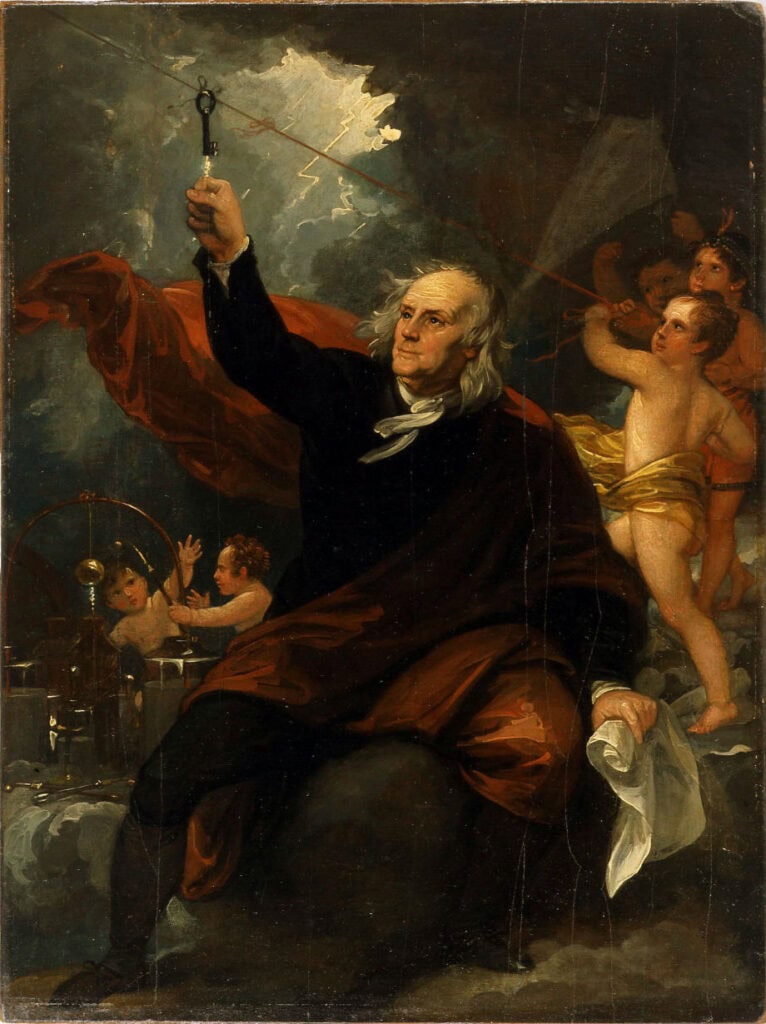
After showing that lightning is electricity, Franklin suggested a pointed iron rod on the roof, connected by a wire to the ground. Lightning would follow the rod instead of setting the house on fire. Lightning rods spread across America and Europe within a few years, and the same idea still protects buildings today.
The Franklin Stove
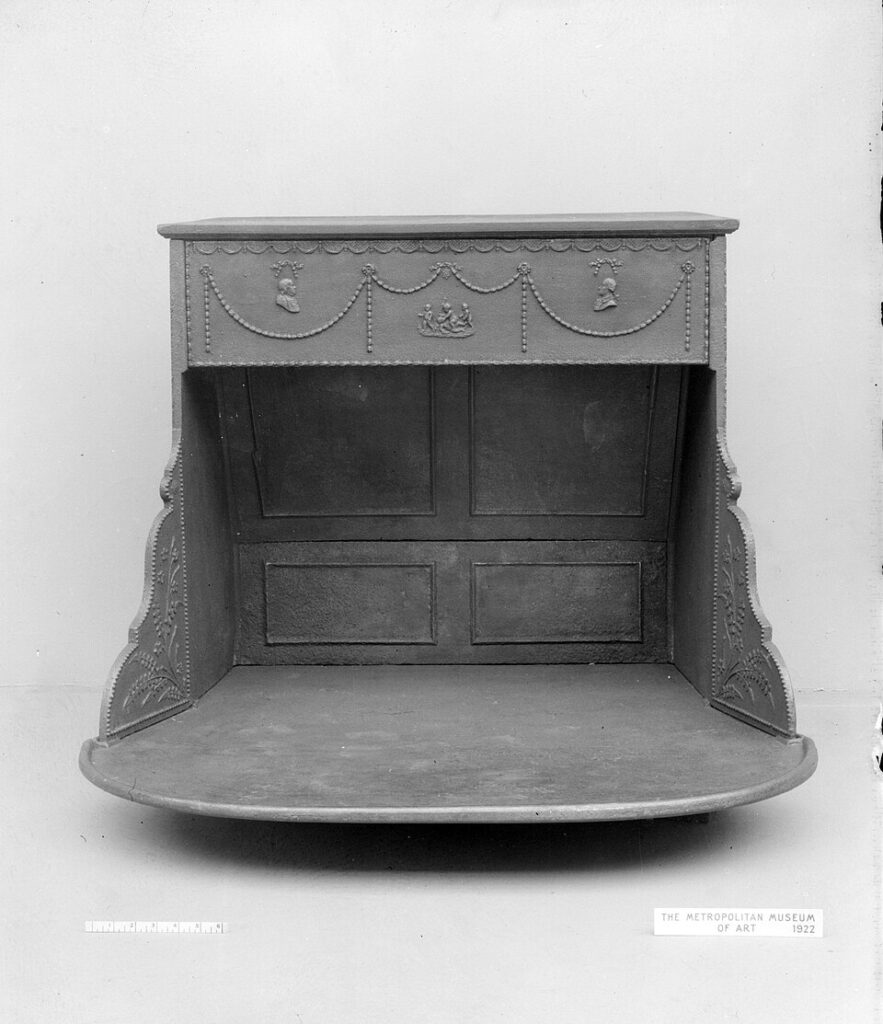
Colonial homes were heated by open fireplaces that sent most of the warmth up the chimney. Around 1742 Franklin designed an iron fireplace that sat out in the room and pushed more heat into it while burning less wood. He called it the Pennsylvania fireplace. Everyone else called it the Franklin stove.
Bifocals
In old age Franklin was tired of switching between reading glasses and distance glasses, so he had the lenses cut in half and joined, distance on top and reading on the bottom. In a 1785 letter he said these "double spectacles" helped him at dinner in France, where watching faces helped him follow the French.
The Glass Armonica
In 1761 Franklin heard music played on wine glasses and built a better version: glass bowls of different sizes on a spinning rod, played with wet fingertips. Mozart and Beethoven both wrote music for it.
Swim Fins
At about eleven, Franklin, a strong swimmer all his life, made wooden paddles for his hands to swim faster. It was one of his first inventions.
A Flexible Catheter
In 1752 he designed a flexible catheter to ease his brother John's illness, an early medical device in America.
"That, as we enjoy great advantages from the inventions of others, we should be glad of an opportunity to serve others by any invention of ours; and this we should do freely and generously."
Franklin in his Autobiography, on why he refused a patent for his stove

At Lynch Creek Today
Franklin's stove was about getting the most out of a winter fire. Our cabin is still gathered around a real fireplace, and our Colonial Hearth Days project explored how families cooked and lived around the hearth in Franklin's time.
Fact Check
Common Myths About Franklin
Myth"Franklin discovered electricity."
FactPeople knew about electricity long before him. What Franklin showed was that lightning is electricity, and he gave us words we still use, such as battery, positive and negative charge.
Myth"Lightning struck his kite."
FactIf it had, Franklin would almost certainly have been killed. His kite collected electric charge from the storm clouds, enough to make a spark jump from a key on the string to his knuckle.
Myth"He wanted the turkey to be the national bird."
FactHe never proposed it. In a 1784 letter to his daughter that he never sent, he poked fun at the eagle on the badge of the Society of the Cincinnati, a club of Revolutionary War officers, and joked that the turkey was "a much more respectable bird." By then the eagle was already on the Great Seal.
Myth"An investment in knowledge pays the best interest."
FactIt sounds exactly like him, but no one has found it in anything Franklin wrote. The line appears decades after his death. The same goes for "Tell me and I forget, teach me and I remember, involve me and I learn."
A Habit for Life
Franklin's 13 Virtues
As a young man in Philadelphia, Franklin set himself what he called "the bold and arduous project of arriving at moral perfection." He picked thirteen virtues, wrote a short rule for each, and kept a small notebook with a chart: one column for each day, one row for each virtue. He focused on one virtue a week and marked a dot every time he slipped. That way he could go through all thirteen in thirteen weeks, four times a year.
He admitted he never reached perfection. But he wrote that he was "a better and a happier man" for trying, and the method itself, a small daily habit tracked on paper, still works.
- Temperance. Eat not to dullness; drink not to elevation.
- Silence. Speak not but what may benefit others or yourself; avoid trifling conversation.
- Order. Let all your things have their places; let each part of your business have its time.
- Resolution. Resolve to perform what you ought; perform without fail what you resolve.
- Frugality. Make no expense but to do good to others or yourself; i.e., waste nothing.
- Industry. Lose no time; be always employed in something useful; cut off all unnecessary actions.
- Sincerity. Use no hurtful deceit; think innocently and justly, and, if you speak, speak accordingly.
- Justice. Wrong none by doing injuries, or omitting the benefits that are your duty.
- Moderation. Avoid extremes; forbear resenting injuries so much as you think they deserve.
- Cleanliness. Tolerate no uncleanliness in body, clothes, or habitation.
- Tranquility. Be not disturbed at trifles, or at accidents common or unavoidable.
- Chastity. Keep your private life honorable, and never let it harm your health or anyone's good name.
- Humility. Imitate Jesus and Socrates.
Test Yourself
How Well Do You Know Ben Franklin?
Ten quick questions. Pick an answer to see if you were right.
Franklin shared what he learned with his neighbors every month in his almanac. We do the same in our free monthly newsletter.
Wit and Wisdom
Poor Richard's Almanack: Real Franklin Quotes
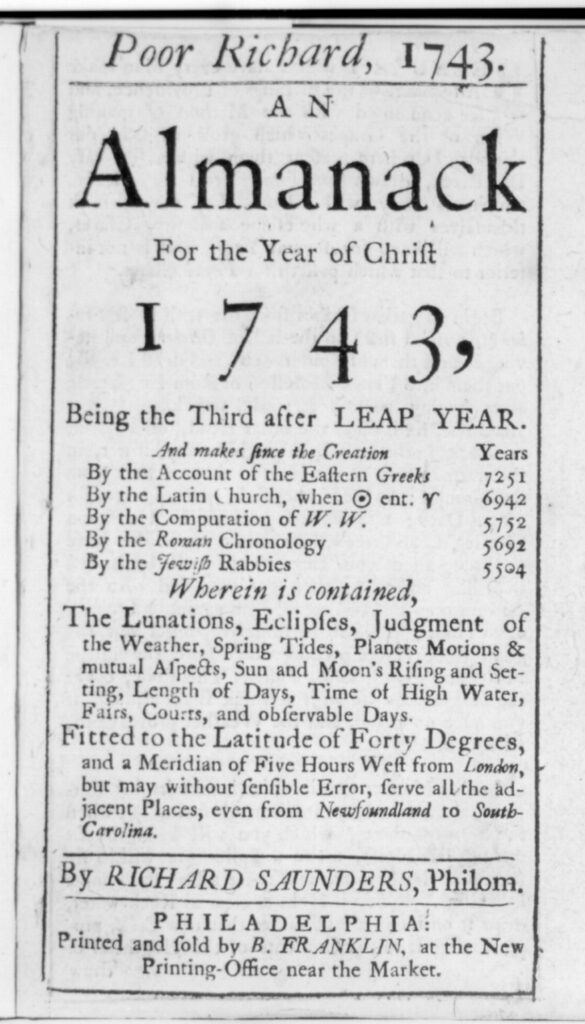
In 1732 Franklin began publishing Poor Richard's Almanack under the name Richard Saunders, a poor, henpecked stargazer he invented for the job. Almanacs were in almost every colonial home: weather, tides, calendars and a little entertainment. Franklin filled the gaps with short, sharp sayings, some his own and many borrowed and improved. The almanac ran for twenty-five years and made him well known across the colonies.
And one people get slightly wrong: Franklin wrote "A penny saved is two pence clear." The version "a penny saved is a penny earned" came later.

At Lynch Creek Today
Franklin used his almanac to share news, advice and good humor with his neighbors. Our free monthly newsletter does something similar for more than 1,000 readers: upcoming dinners, programs, research and news from the farm.
Subscribe to the NewsletterLearning Together
The Junto and the Library Company
In 1727, at 21, Franklin gathered a dozen young tradesmen in Philadelphia into a club he called the Junto. They met on Friday evenings to discuss books, science, business and how to make their city better. Members took turns bringing questions for discussion, and they kept the debates friendly on purpose.
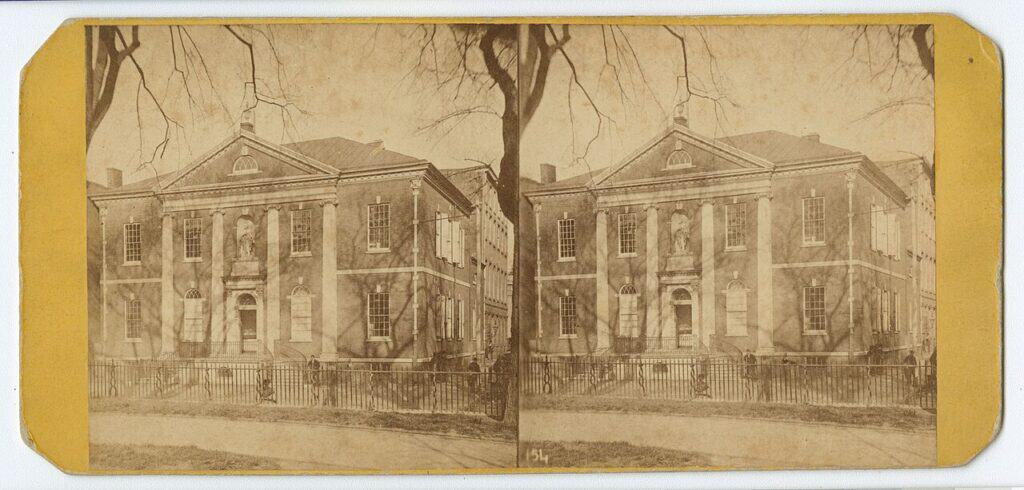
The Junto turned out to be a machine for public projects. Because books were expensive, the members pooled theirs, and in 1731 Franklin used that idea to found the Library Company of Philadelphia, one of the first lending libraries in America. Junto conversations also led to Philadelphia's volunteer Union Fire Company in 1736, the American Philosophical Society in 1743, and the Pennsylvania Hospital in 1751.
The lesson Franklin drew was simple: a few people who meet regularly, share what they know and agree to act can change a whole community.
At Lynch Creek Today
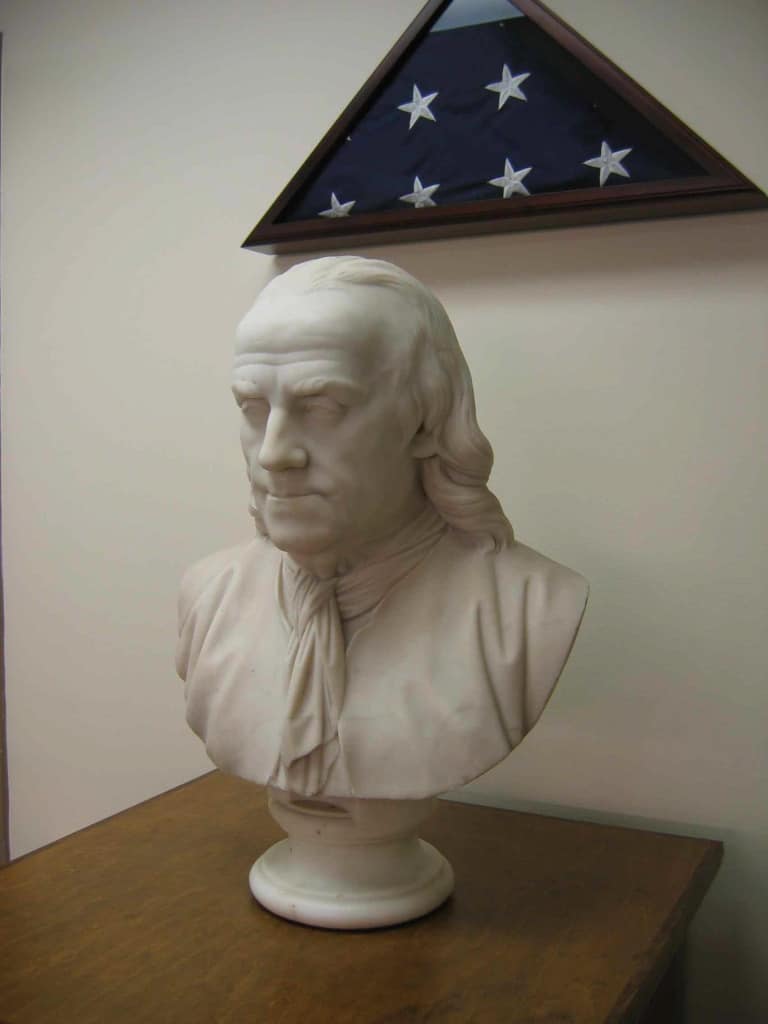
The Ben Franklin Society works in the same spirit. Members carry out independent and collaborative research on matters important to Franklin County, from the Grist Mill Inventory prepared for the North Carolina State Archives to studies of local homelessness, and the Book and Media Club gathers members to read and talk, much like the Junto did.
Food and Friendship
Franklin at the Table
Franklin's first morning in Philadelphia is one of the best-known scenes in his Autobiography. Tired and hungry, the seventeen-year-old found a bakery and asked for three pennies' worth of bread. He was handed "three great puffy rolls." With no room in his pockets, he walked up Market Street with a roll under each arm, eating the third. A young woman named Deborah Read watched from her father's doorway and thought he looked ridiculous. Years later she became his wife.
Food kept turning up in his life:
- As a teenage apprentice he tried a vegetarian diet. Part of the appeal was practical: it was cheaper, and he spent the savings on books.
- In a 1770 letter from London to his friend John Bartram in Philadelphia, he sent soybeans along with a description of a Chinese "cheese" made from them, "Tau-fu." It is the earliest known mention of tofu by an American. In the same letter he sent rhubarb seeds.
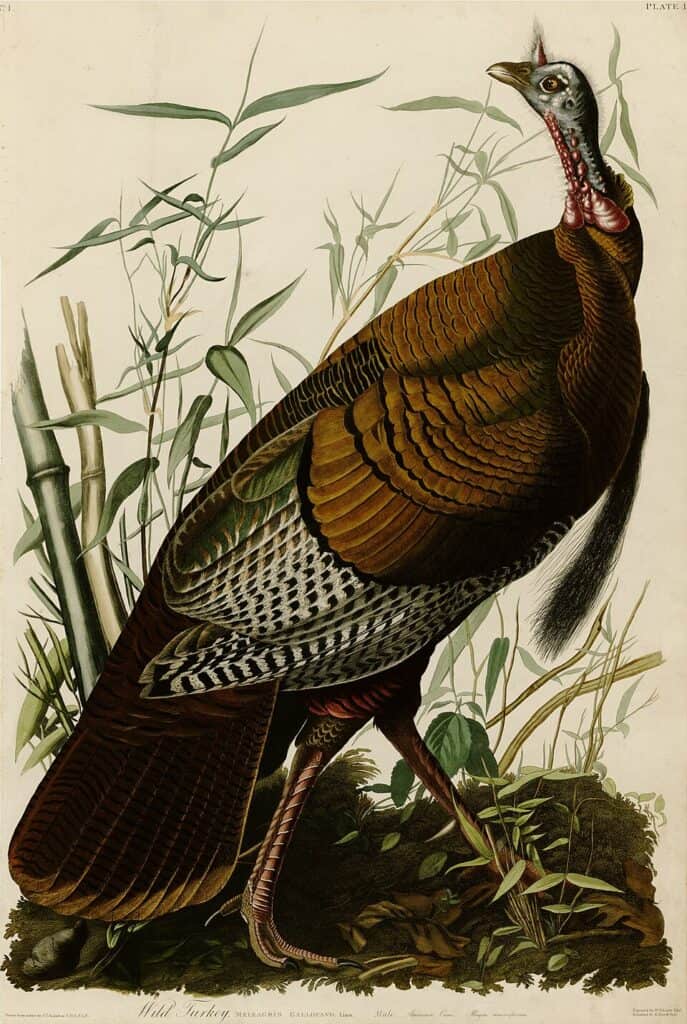
- And there is the turkey. Franklin admired the bird as "a true original native of America," and a Thanksgiving turkey is about as American as a meal gets.
At Lynch Creek Today
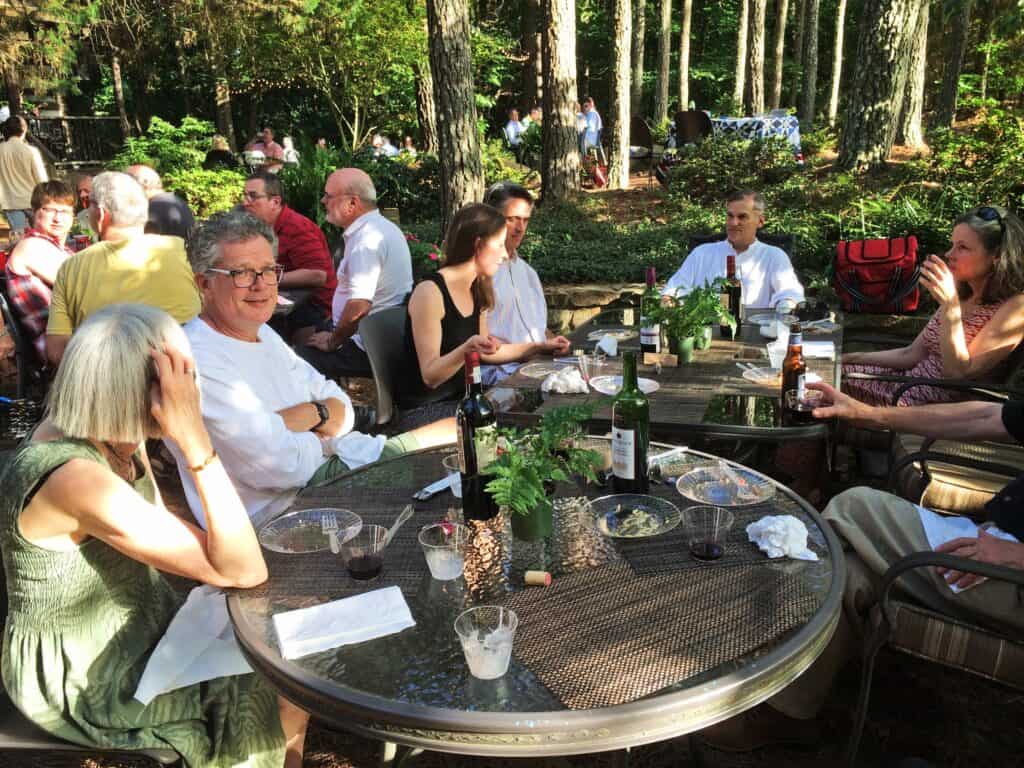
Franklin knew that good conversation happens around a table. Bob Radcliffe and Kerry Carter left Philadelphia for Franklin County, and today the Society's Philly in the Woods dinners at the cabin bring members together over a shared meal. Every dinner is a fundraiser for the Society's programs.
Learn About Philly in the WoodsHis Lasting Gift
A Legacy of Education
Franklin had about two years of school, and he never forgot what learning did for him. In 1749 he published Proposals Relating to the Education of Youth in Pensilvania, arguing that young people should learn practical, useful knowledge, not just Latin and Greek. The Academy he helped start opened in 1751 and grew into the University of Pennsylvania.
He planned for students even after his death. In 1789 he added a codicil to his will leaving 1,000 pounds each to Boston and Philadelphia. The money was to be lent to young tradesmen starting out, and to keep growing for 200 years. Part was released after the first century, and the rest in 1990, when the Boston fund had grown to roughly $5 million and Philadelphia's to about $2 million. Philadelphia spent much of its share on scholarships for local high school students.
Franklin's idea was that a small amount, invested in young people and given time, can do great things.
At Lynch Creek Today
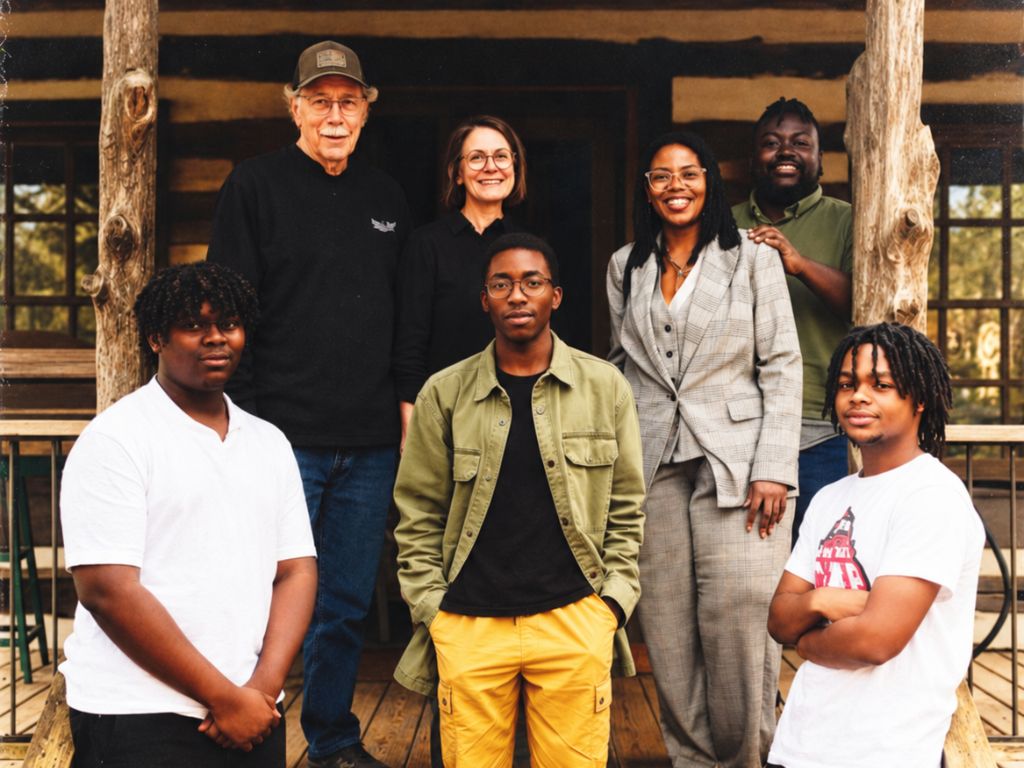
That idea is behind our Middle School Scholarship Fund. Each summer the Society sends Franklin County middle school students in grades 6 to 8 to a week-long marine science program at UNC Wilmington. Most scholarships wait until the end of high school. We start earlier, when curiosity is turning into goals.
$1,500 sends one student for a full week
Support the Scholarship FundQuestions
Frequently Asked Questions
Was Benjamin Franklin ever president?
No. He was never President of the United States. He did serve as President of Pennsylvania's Supreme Executive Council, much like a state governor, from 1785 to 1788.
What did Benjamin Franklin invent?
His best-known inventions are the lightning rod, the Franklin stove, bifocals, the glass armonica and swim fins. He patented none of them.
What are Benjamin Franklin's 13 virtues?
Temperance, Silence, Order, Resolution, Frugality, Industry, Sincerity, Justice, Moderation, Cleanliness, Tranquility, Chastity and Humility. He tracked them one week at a time in a small notebook.
Did Franklin really fly a kite in a thunderstorm?
Yes, in 1752, according to the account Franklin gave his friend Joseph Priestley. Lightning did not hit the kite. It collected electric charge from the storm clouds, which proved that lightning is electrical.
Why is Franklin County, North Carolina named after him?
The county was created in 1779, during the Revolutionary War, and named in honor of Benjamin Franklin, who was then representing the United States in France.
What is the Ben Franklin Society?
The Ben Franklin Society is a North Carolina 501(c)(3) nonprofit based at Lynch Creek Farm in Kittrell. Inspired by Franklin, it supports research, education and community projects in Franklin County, including the Middle School Scholarship Fund.
Join Us
Carry Franklin's Ideas Forward
Franklin believed that curious people who meet, learn and act together can make their community better. That is what the Ben Franklin Society tries to do every day in Franklin County.